Radiation detection systems
Passive Radon Monitor (PRM)

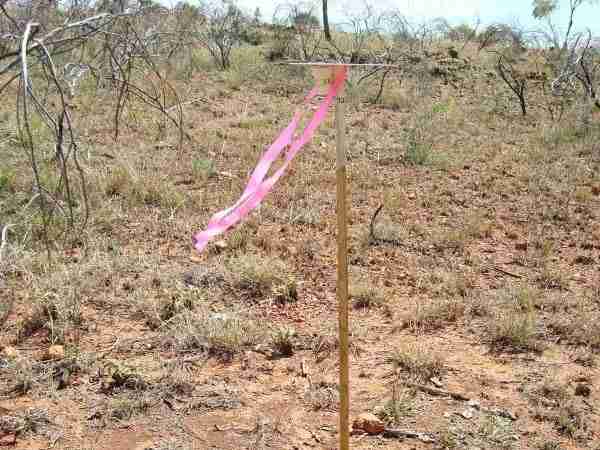
The principal of RDS developed the methodology for the radon activity concentration monitoring in the soil, air and in water by solid state nuclear track detectors. RDS provides the radon concentration in air monitoring service by nuclear track detectors to the uranium mining industry and caves in Australia.
The Passive Radon Monitor (PRM) is the radon monitoring system that uses the nuclear track detector film Kodak LR-115. The film inside the chamber of the featured blue badge is exposed to the alpha radiation of radon and radon decay products. The alpha track density to the radon activity concentration exposure conversion factor is obtained through the system calibration inside the South Australian EPA Radiation Protection Branch Radon Calibration Chamber.
Typically, the PRM is exposed either in outdoor or indoor air environment for a period of 3 months. Exposed PRMs are sent to RDS for evaluation. The Lowest Limit of Detection (LLD) of measured radon activity concentration by the PRM is about 7 Bq/m3.
Universal Radon Daughter Monitor (URDM)
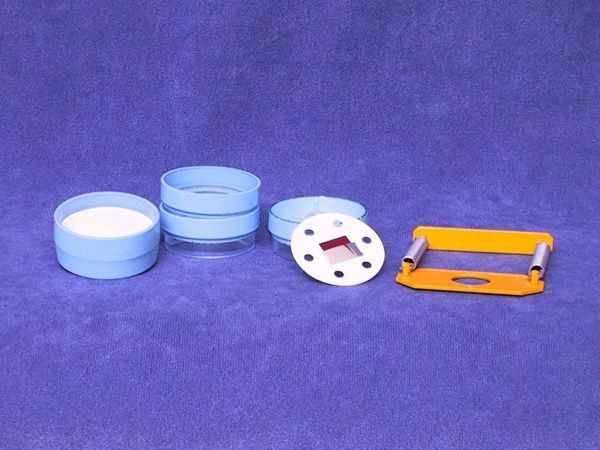
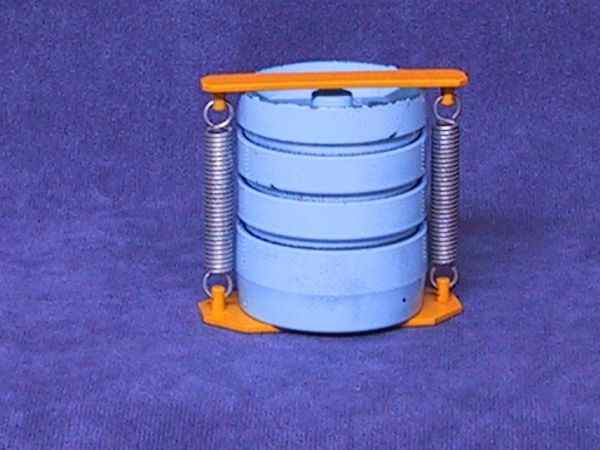
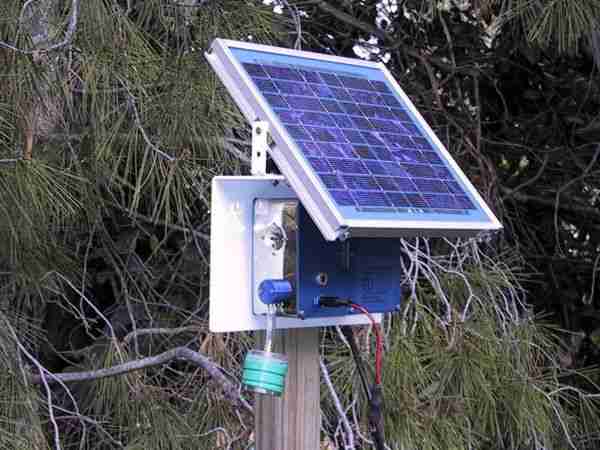
The URDM is a semi-passive radon daughter monitoring system that can be coupled with any medium constant flow rate air sampler. The URDM contains the glass fiber filter and the nuclear track detector film Kodak LR-115. When air is sucked through the filter radon daughter products remain on the filter and the alpha particles they emit are detected by the nuclear track detector film. The film is developed, the nuclear tracks are counted and the potential alpha energy concentration (PAEC) of radon daughters is estimated by considering the total volume of sampled air through the filter and the track density.
The alpha track density to the PAEC of radon daughter conversion factor is obtained through the system calibration inside the South Australian EPA Radiation Protection Branch Radon Calibration Chamber.
Nuclear Track Uranium Ore Exploration Tool (NTUOET)

The NTUOET is used for the shallow uranium orebody detection through the radon gas monitoring in the soil air above the orebody.The NTUOET can detect much deeper uranium mineralization than a scintillometer or the airborne gamma spectrometry.
Radium generates radioactive radon gas (222Rn) through its radioactive decay in uranium ore. A small fraction of radon gas escapes from uranium bearing minerals and becomes mobile in pores of the orebody. Radon gas can subsequently diffuse a few meters in pore air above the orebody depending mainly on the moisture content in rock and soil pores. It has been demonstrated that in dry soil conditions an elevated radon activity concentration in the soil air could be due to the uranium mineralization situated up-to 5 m below the surface. Nevertheless, radon can reach the NTUOET from much deeper orebodies due to its transport through faults.
The NTUOET is inserted by a client into a tightly made hole in soil so the bottom of the tool is 13 cm below the surface. It is required to slightly compact soil around the tool by a hammer. Typically, the NTUOET is exposed during a period of 2 – 4 weeks. Within 3 – 5 weeks after the exposed NTUOETs are received RDS e-mails the radon activity concentrations in the soil air (excel spreadsheet) to the client.
Prediction and monitoring of secondary cosmic radiation exposures for commercial airline aircrews
RDS supplies to an airline a secondary cosmic radiation dose rate monitor that is used to measure and log the dose rate in 10 minute monitoring intervals during flights. The client can store up-to 10 flight route data logs in the microcontroller memory of the monitor. Individual route cosmic radiation dose data logs are downloaded by a client to a PC and evaluated according to an easy step by step instruction. Alternatively, the client may decide to e-mail data logs to RDS for further evaluation and comparison with the predicted cosmic radiation dose by a computer model that takes into account the name of the departure and arrival airports, the date/hour when the flight started, the flight altitudes and the time the aircraft spent on those altitudes.